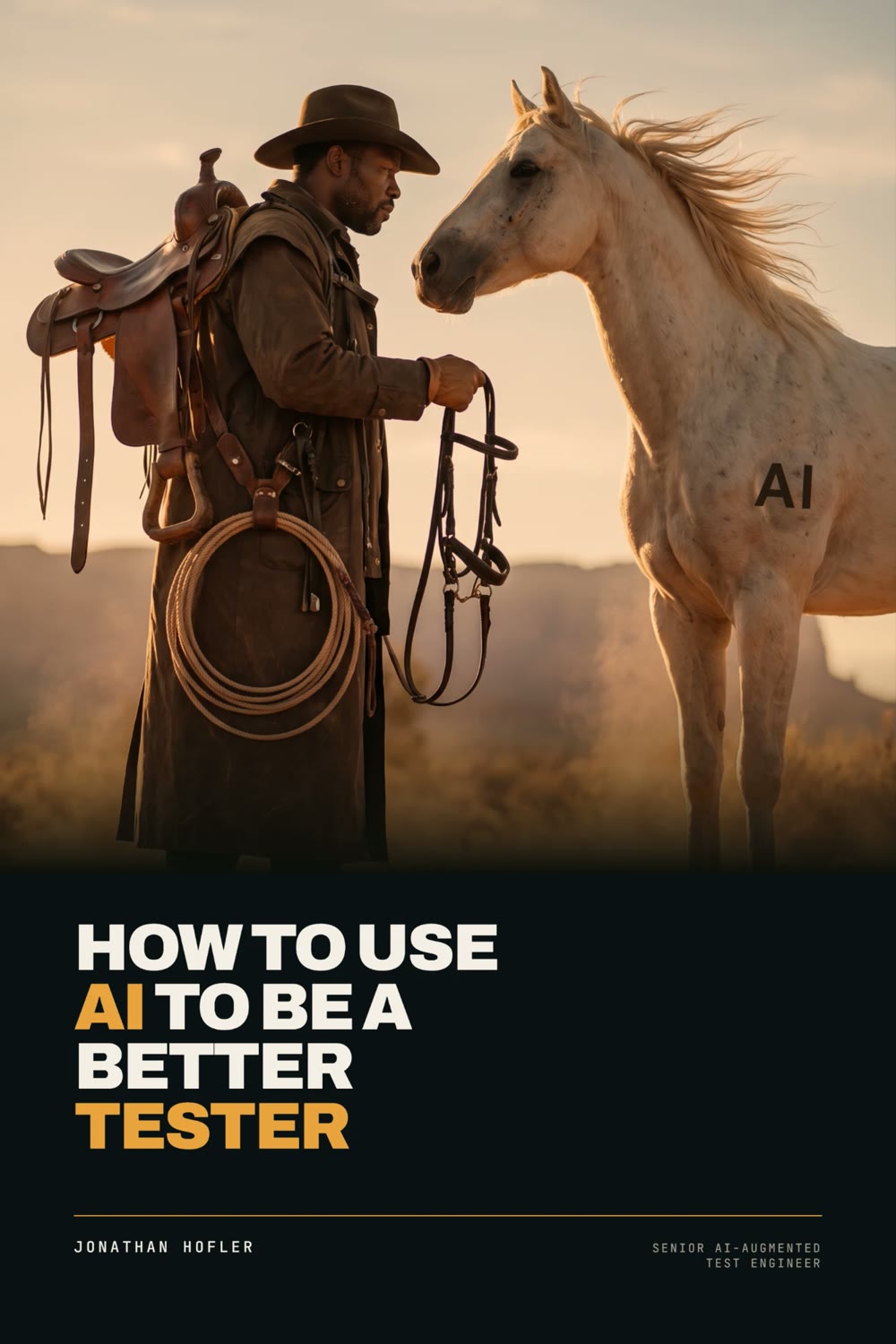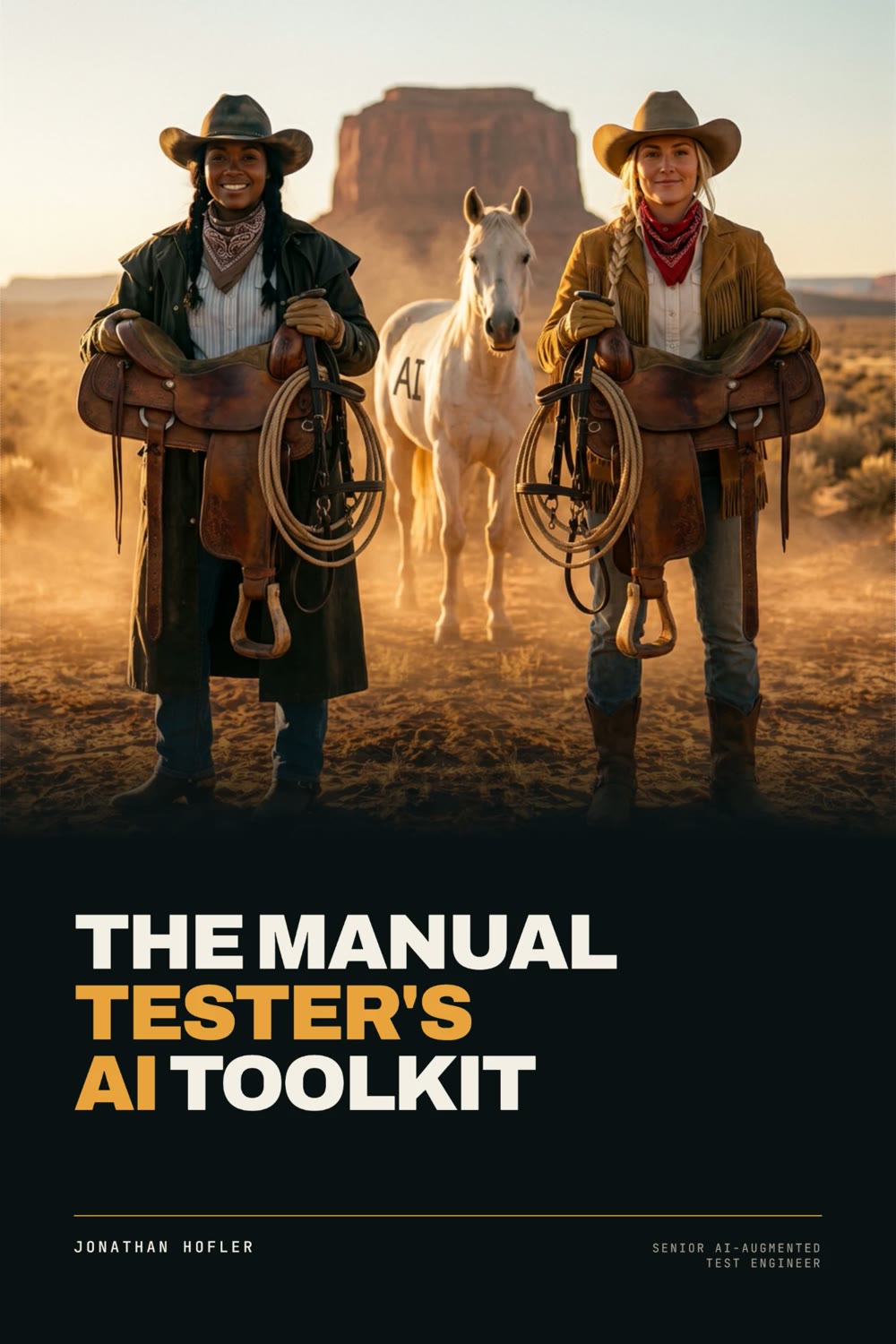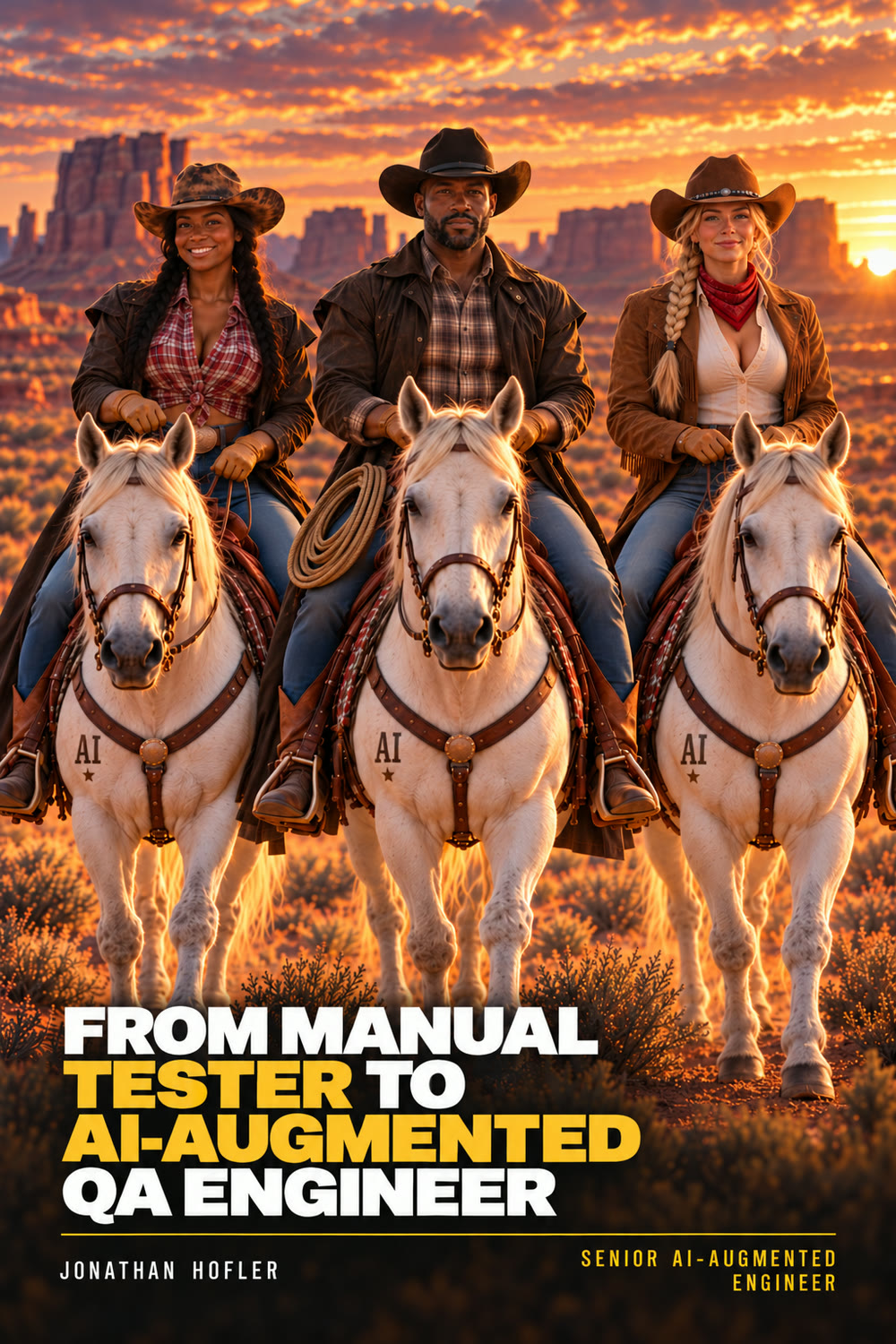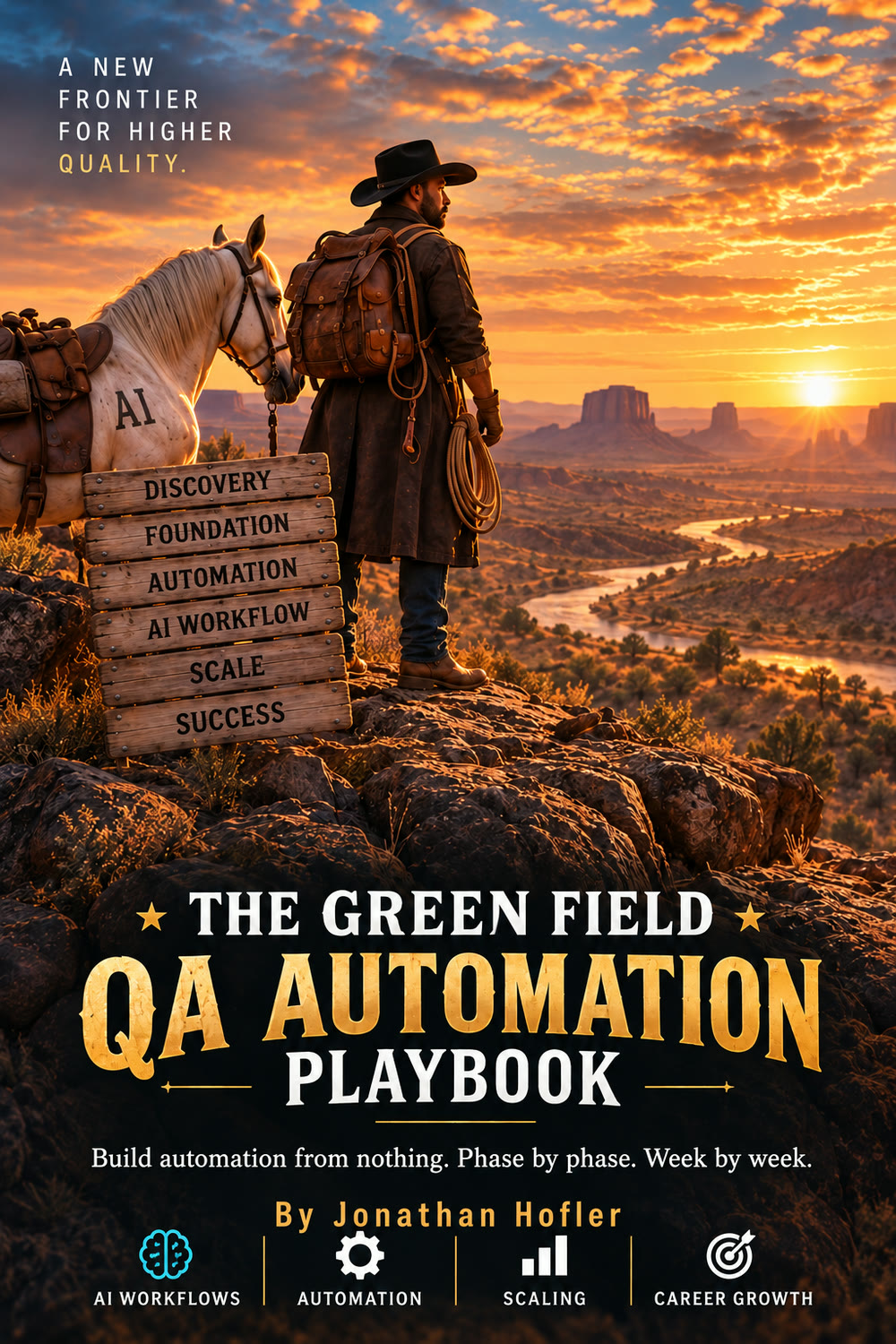

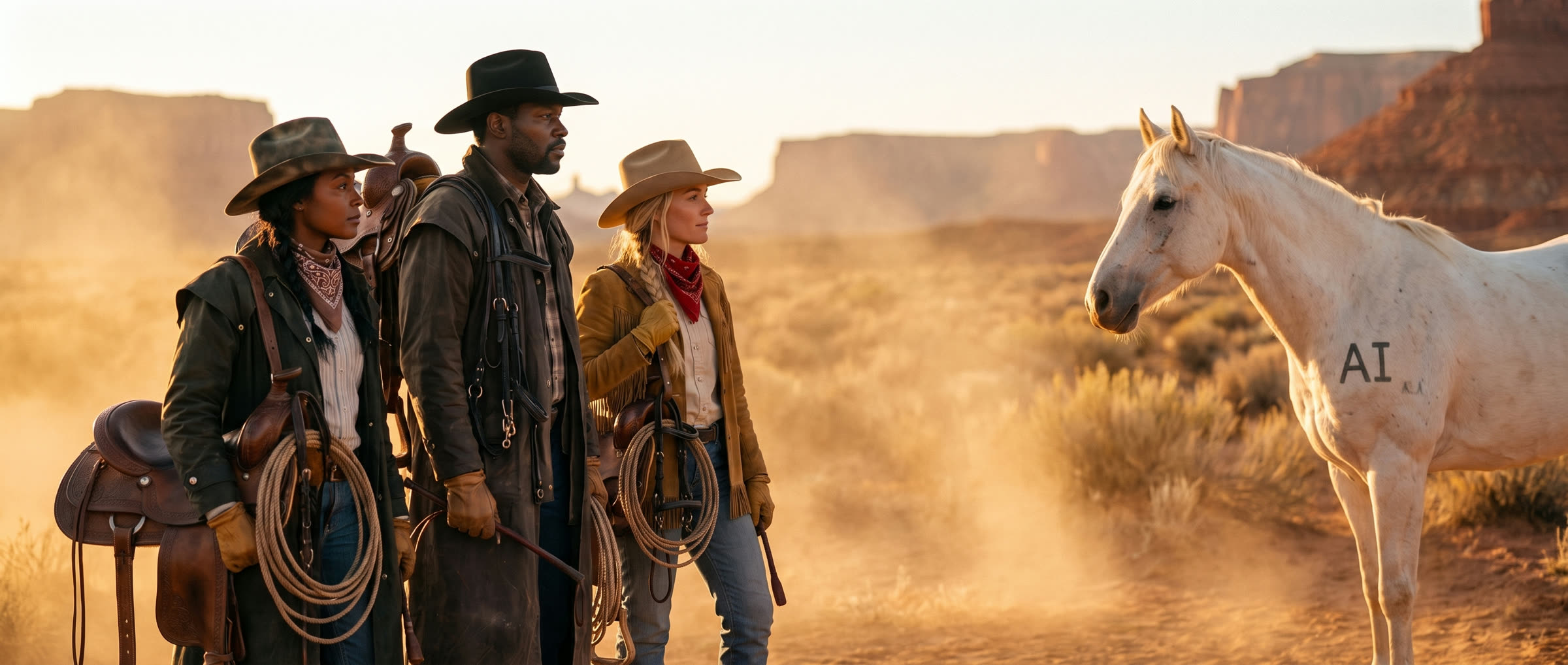
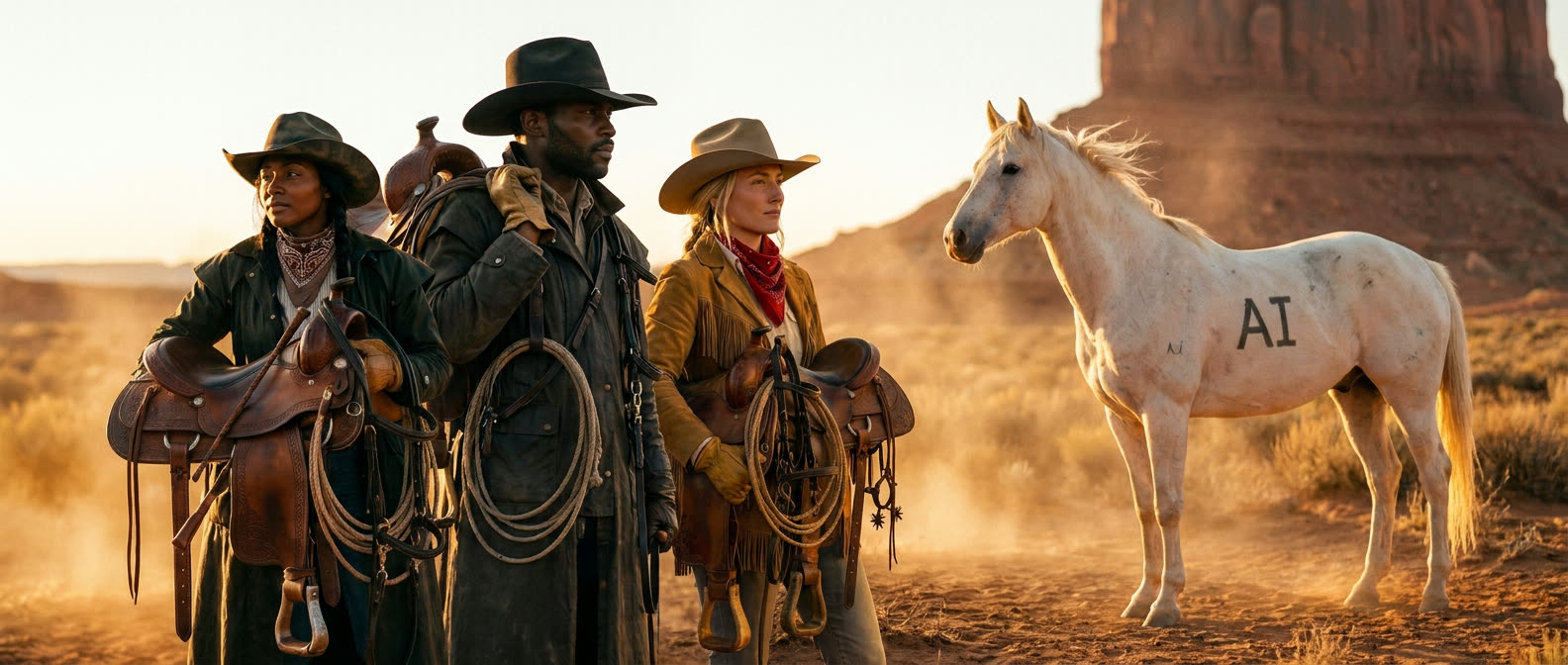
AI is QA's
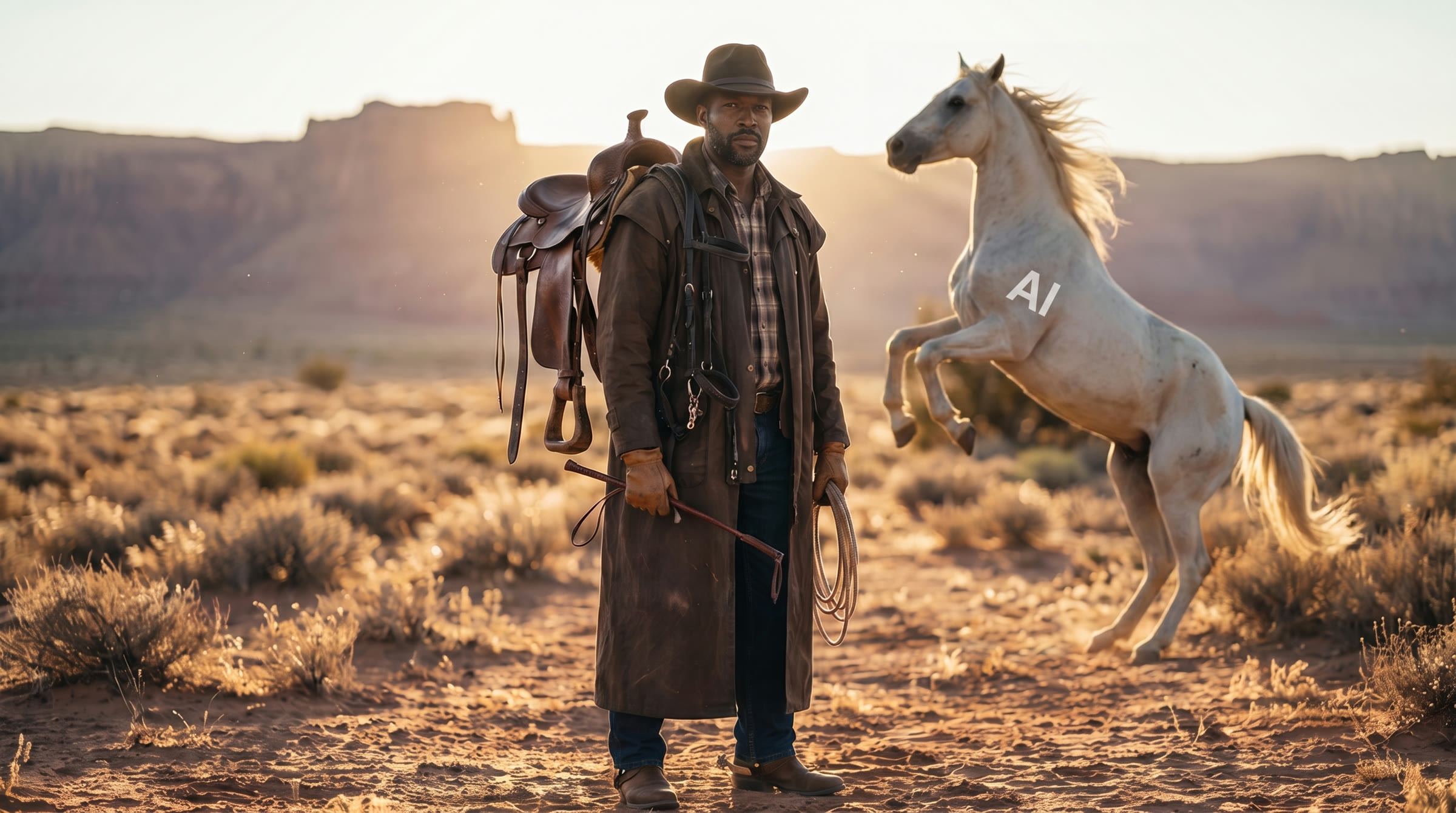
wild horse.Tame it.
Most people ride bareback and wonder why they keep getting thrown.
Most people ride bareback and wonder why they keep getting thrown.
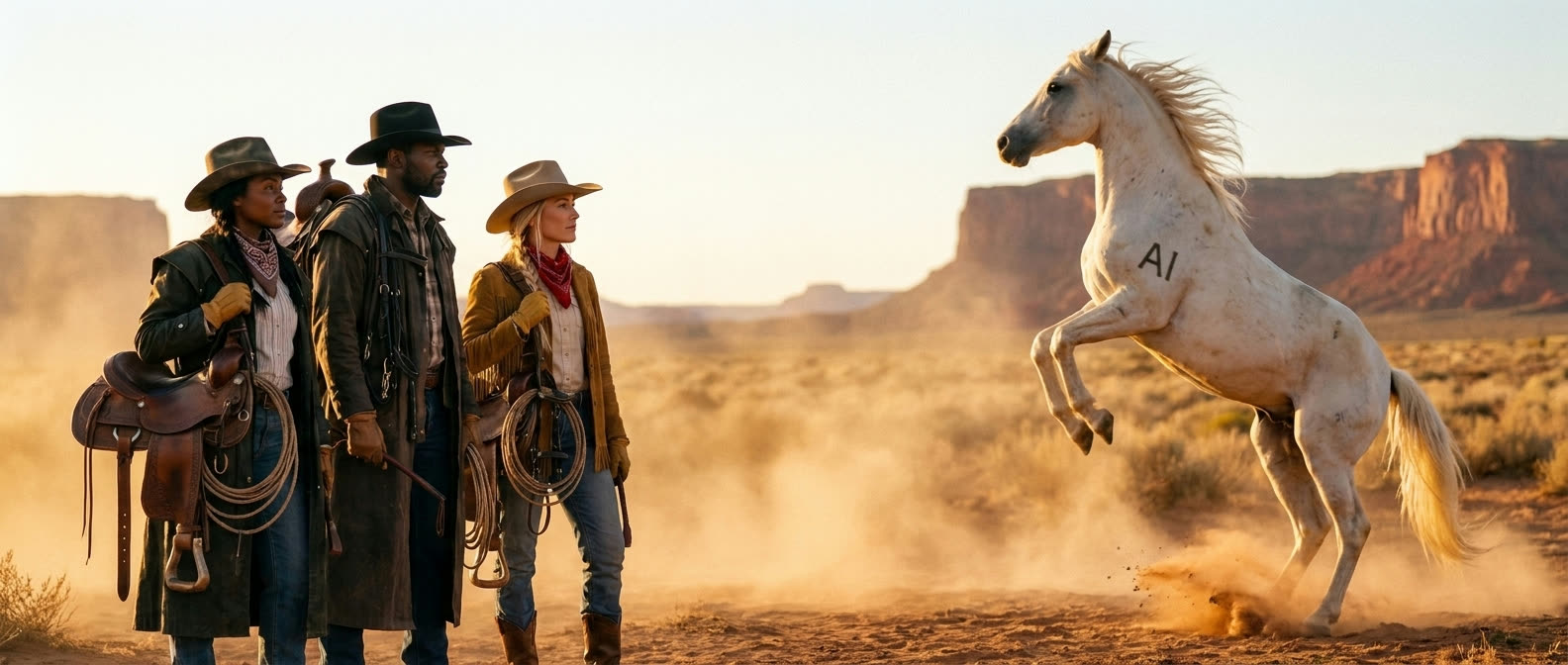
Meet the riders
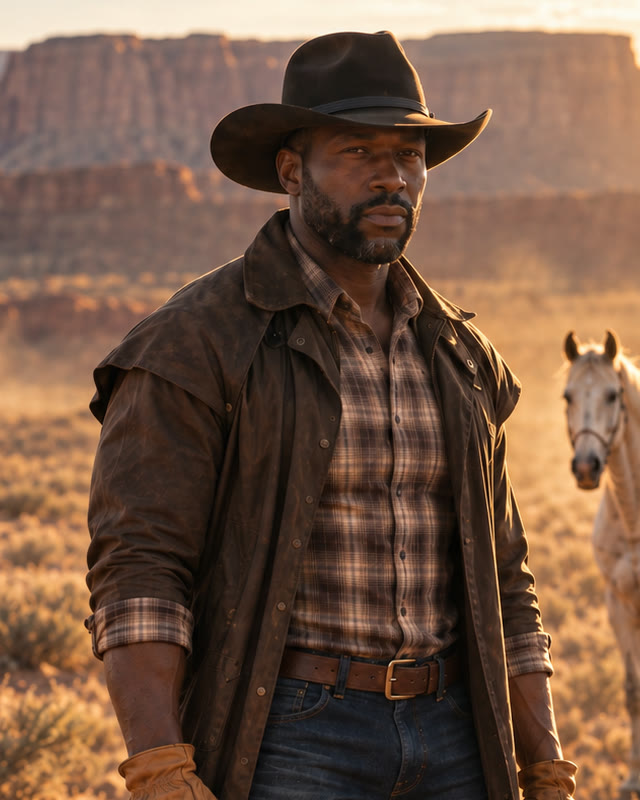 The QA Kid
Eli Smith
AI-Augmented QA Engineer
 The Cowgirl
Ada Wright
SDET
 The Rider
Cassidy Steele
QA Automation Engineer
The Gear
Every piece comes out of these three guides. Guide 1 teaches the concept. Guide 2 gives you the prompts and techniques. Guide 3 puts them to work.

Bridle
The complete headgear. Headstall over the head, bit in the mouth, reins in your hands, one assembly.
The rider's whole communication system with the horse. Without it you have no way to say anything.
QA Focus
Your prompt structure. Role, context, task, example, constraints, think first. A structured prompt is how you tell AI exactly what you want instead of hoping it guesses. Learn the structure once and every prompt you write gets clearer.
Watch this lesson
Bit
The metal mouthpiece resting in the gap of the horse's lower jaw.
Where control actually lands. It sets the line the horse cannot push past.
QA Focus
The hard limits you write into a prompt. "Do not invent details I did not provide." "Use obviously fake test data, never real card numbers." Lines the AI cannot cross, written before it answers.

Reins
Two long leather straps running from the bit back to the rider's hands.
Steering. Turn, slow, stop. The horse goes where the reins point it.
QA Focus
The role you assign. Tell AI to think like a senior QA engineer and it hunts coverage gaps. Tell it to think like a security tester and it hunts injection and auth bypass. Same feature, different direction, steered by one line.
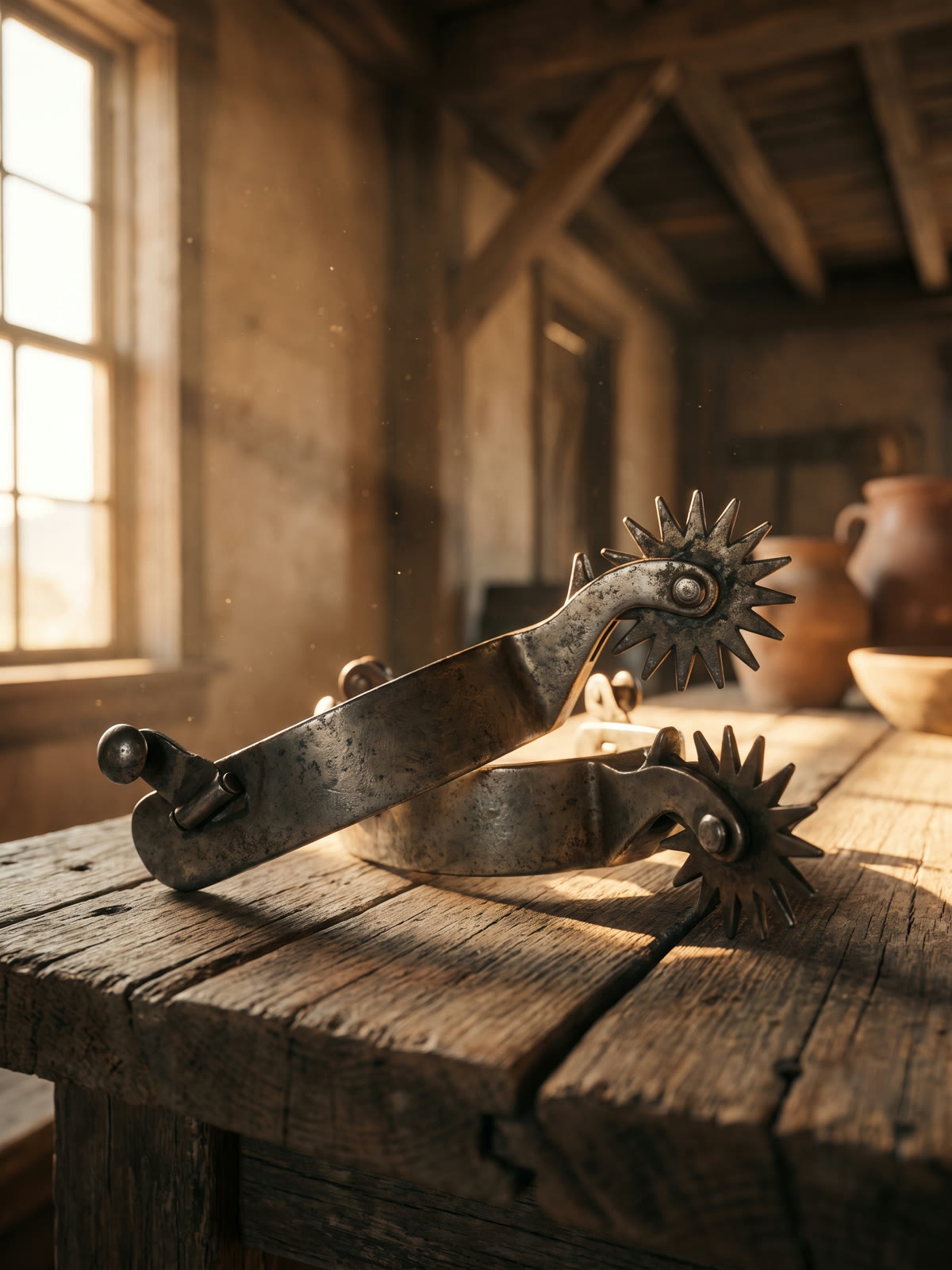
Spurs
Metal heel bands with a rotating rowel, worn on the rider's boots.
A cue, not a shove. One light, exact touch that sharpens the horse's response mid-ride.
QA Focus
Precision in your prompts. Small, exact cues instead of vague asks. "Test the checkout flow" wanders. "Test card decline handling when the user has items from two sellers" lands. Precise prompts keep AI sharp and on track.

Riding Crop
A short stiff shaft with a leather popper, carried in the rider's hand.
The backup nudge. When the leg cue gets ignored, one tap repeats the ask. Never a beating, never a new command.
QA Focus
Your follow-up prompt. The first answer comes back thin, so you tap: "What about boundary values. Empty and null. Network loss mid-payment. Non-Latin characters." Not a rewrite of the prompt. A nudge that surfaces what it skipped.
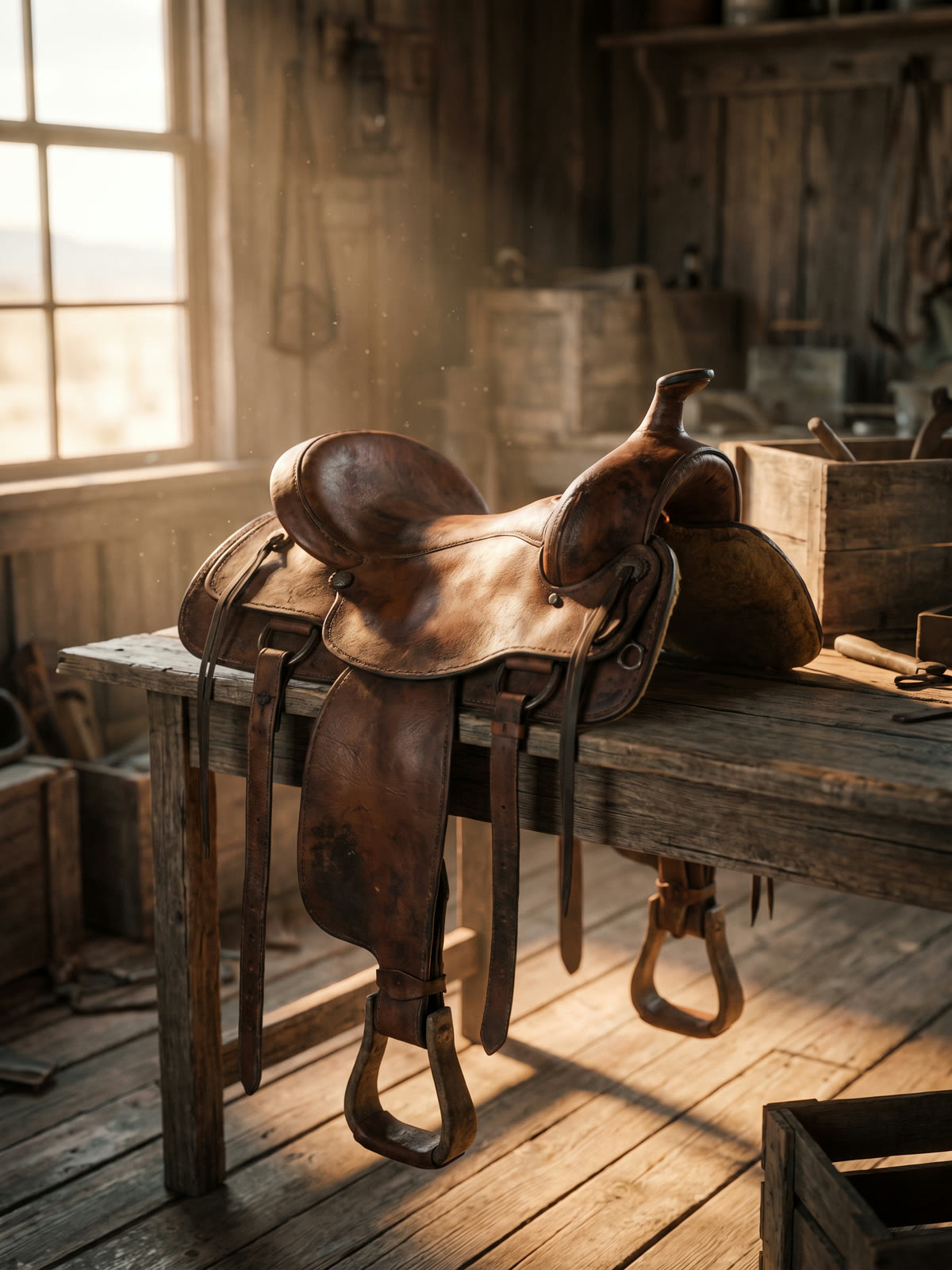
Saddle
A leather rig built on a wooden tree, cinched to the horse's back.
Your seat. It spreads your weight, keeps you steady, and it is the one piece the horse never comes with. The rider brings it.
QA Focus
Your working knowledge. Of the product you test and of AI itself, what it does well and where it fails. AI amplifies what you bring. A tester who knows where checkout breaks gets gold from AI. A tester who brings nothing gets confident noise.

Lasso
A long rope with a slip noose, thrown from horseback.
Catching what's running loose and bringing it under control, one throw, one target.
QA Focus
The technique you throw at a specific runaway. An ambiguous ticket, roped into test conditions. An unscoped session, roped into a charter with a time box. One targeted prompt technique for one loose problem.

Hat and Duster
The rider's own clothing. Wide felt brim, long canvas coat.
Not for the horse at all. It is what makes the rider fit to be out there, whatever the weather does.
QA Focus
Your methodology, the part AI never wears. Every AI test case clears your gate before it enters the suite: Would a real user hit this? Does it matter to the business? Would two testers land the same result? Is the priority right? You are the verification layer. Severity calls, scope cuts, release sign-off. Those stay human.
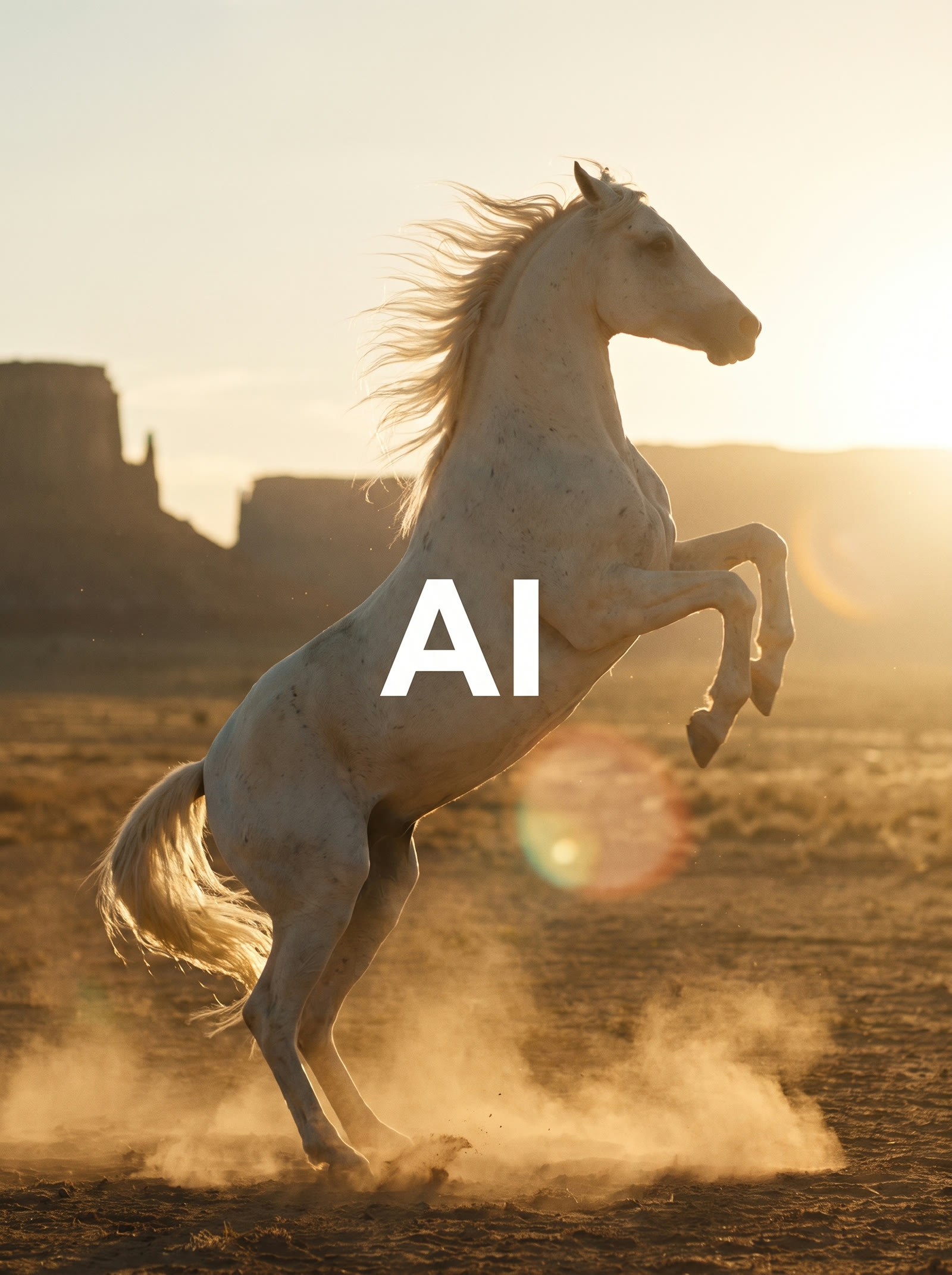
The Horse
The working stock horse of the American West. Seven hundred to a thousand pounds of speed and stamina.
The power. Dangerous and directionless until trained, unstoppable once it is.
QA Focus
AI itself. Fast, tireless, and confidently wrong in four repeatable ways: domain knowledge it does not have, novel scenarios it has never seen, severity calls it cannot judge, and product behavior it invents when you leave gaps. Ride it with the gear on, not bareback.
Up Close
Bridle + Bit
The bit says "not past here." The reins say "this way." Together they're a bridle. In a prompt those are separate labeled blocks doing separate work. ROLE casts the tester. CONTEXT hands over the acceptance criteria. TASK is the numbered ask. EXAMPLE shows the shape you want back. CONSTRAINTS is the bit: "Include assertions that check both status codes and response body content." THINK FIRST is the block most people have never used, one sentence telling the model how to reason before it answers.
Spurs
Spurs are one light, exact touch, nothing to do with force. A vague ask gets a wandering answer. A precise one lands. 'Test the checkout flow' comes back generic. 'Test card decline handling when the user has items from two sellers' comes back sharp. The smaller and more exact the cue, the sharper the response. That is the whole discipline: say precisely what you want, and the horse stays on track.
Saddle
A horse doesn't come with a saddle. You bring it. An amplifier does not create the signal. It takes the signal already there and makes it louder. Knowing where a checkout flow breaks is signal. So is knowing where AI fails. The model has none of it until you hand it over. Ride bareback and it is not the horse that fails you.
The Newsletter
The gear, taught in video. Delivered Friday.
No spam. Unsubscribe any time.
You're in. First ride hits your inbox Friday.
The Guides
Verification layer. Calibration. Grounding. Failure modes. Adversarial testing. Those are ISTQB CT-AI and CT-GenAI terms, not ours. The guides teach them on your own work and tell you what they are called, so you can say them in an interview and be understood.
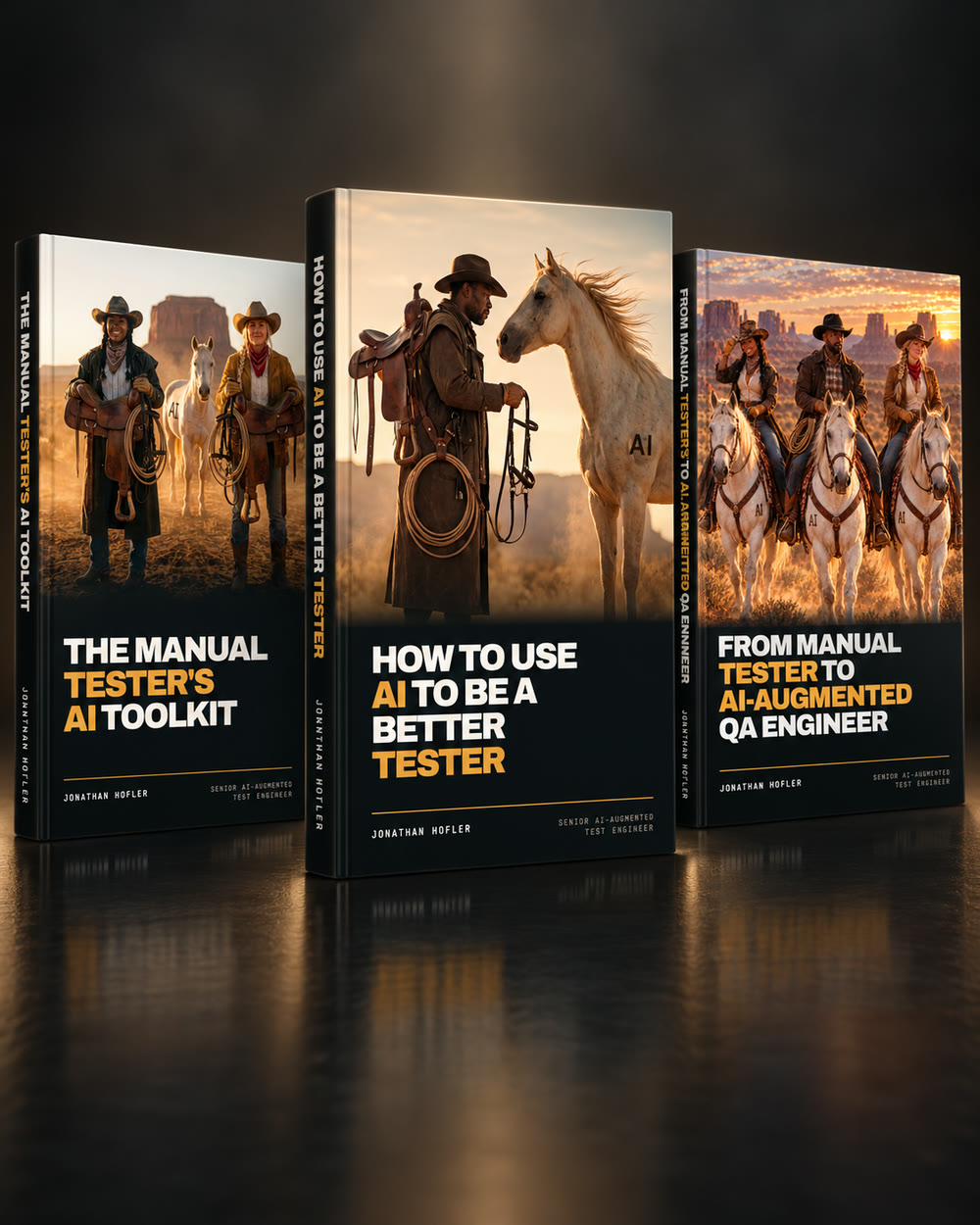
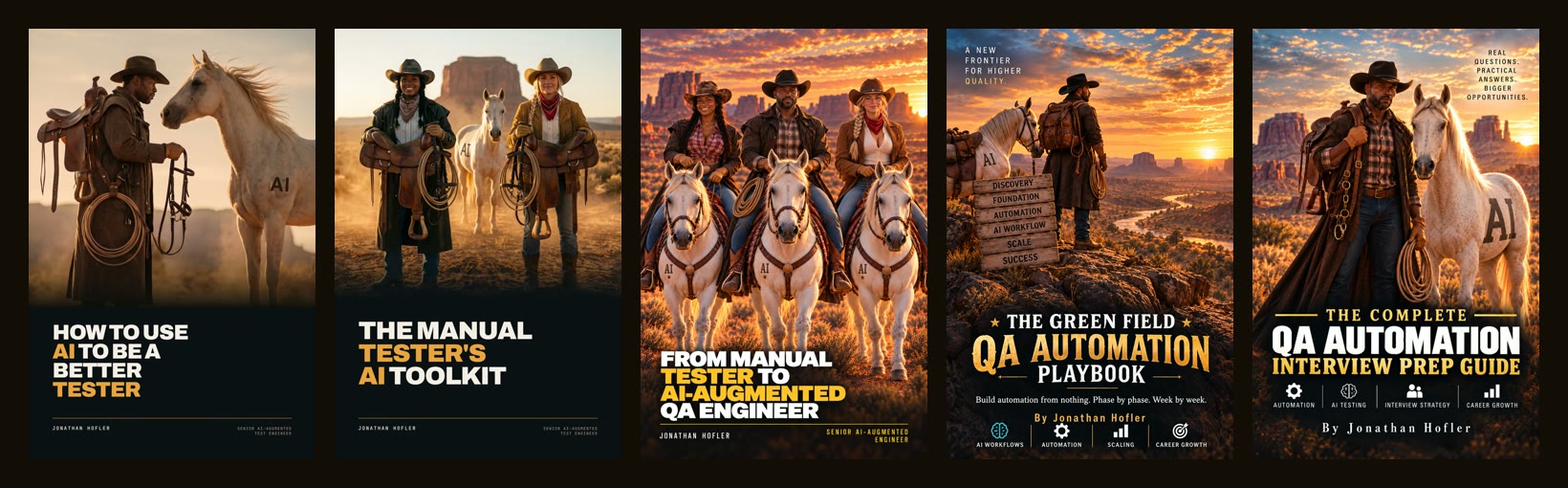
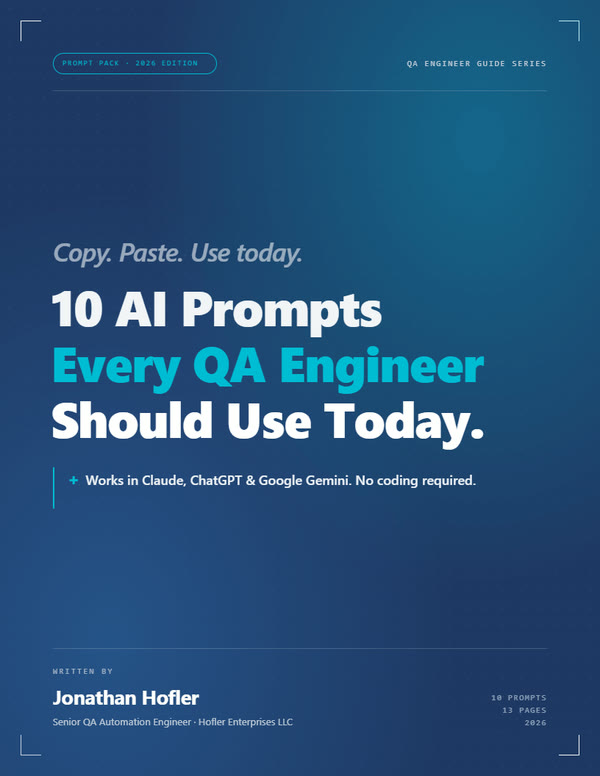
Free. 10 copy-paste AI prompts every QA engineer can use today in Claude, ChatGPT, or Gemini. No coding. No signup.
Three Ways In
For Yourself
Three guides, one path. Concept, then the prompts, then a portfolio with tests running on every push. Buy what you need, skip what you already know.
See the guidesFor Your Team
A regression suite that grew until nobody trusts it. Coverage nobody can defend in a retro. Five people each using AI a different way. Tell us which one it is.
For your teamFor Your Students
Backed by a free course with a real exam and a certificate. Students leave with the vocabulary interviewers recognize.
For your students